
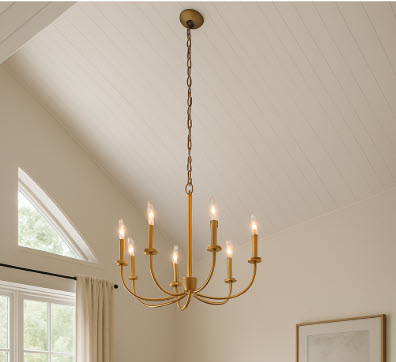
Let’s get one thing straight: sloped ceilings are a vibe. They add architectural charm, drama, and make any room feel just a little more special. But when it comes to installing a chandelier on one? It can feel like you’re solving a puzzle from HGTV’s secret vault.
Fear not, my chandelier-loving friends. Whether you’re working with a cozy vaulted attic space or a grand cathedral ceiling in your living room, I’m breaking down everything you need to know to hang your light fixture safely, beautifully, and like a total pro.
Why Sloped Ceilings Need Special Consideration
A flat ceiling lets your chandelier hang straight down—no problem. But a sloped ceiling? It tilts, and if you don’t plan correctly, your chandelier could hang awkwardly off-center or crooked. Not cute. You need a setup that adapts to the angle of your ceiling and still shows off your chandelier in its full glory.
Key Things You’ll Need (Besides a Ladder and Patience)
A Sloped Ceiling Adapter
This is your MVP. It allows the canopy of the chandelier to pivot so that the fixture hangs straight, even when mounted on an angle. Many modern chandeliers come with one, but if not, don’t worry—they’re sold separately and easy to find.The Right Chain or Downrod Length
You want your chandelier to hang straight and at the right height. Chains are more flexible for steeper slopes, while downrods may need special angled connectors.Proper Ceiling Box and Support Bracket
Sloped ceilings often mean higher ceilings, which can = heavier chandeliers. Make sure your electrical box is rated for ceiling fan or chandelier weight and is securely attached to a ceiling joist.
Height & Placement Guidelines (Because Math Matters)
For Living Rooms & Open Spaces: Hang the bottom of the chandelier at least 7 feet from the floor.
For Dining Tables or Kitchen Islands: Aim for 30–36 inches above the surface of the table or island.
For Entryways with Vaulted Ceilings: Leave around 8 feet of clearance below the fixture if possible.
Pro tip: Measure from the floor vertically, not at an angle, to make sure your chandelier hangs where you want it visually—not just structurally.
Best Types of Chandeliers for Sloped Ceilings
Some chandeliers are more “slope-friendly” than others. Here are a few go-to styles designers love:
Chain-hung Chandeliers: The chain naturally adapts to the angle—no drama, no fuss.
Pendant Clusters: Hang them at staggered heights for a chic, intentional look. Perfect for stairwells or angled entryways.
Linear Chandeliers with Pivoting Joints: Sleek and modern, these are made to flex and adjust with the slope.
Common Mistakes to Avoid
❌ Skipping the Adapter
Unless your chandelier magically comes with a built-in tilt feature, always, always get that sloped ceiling adapter.
❌ Choosing a Rigid Downrod Without Flexibility
If your downrod can’t angle with the slope, you’ll be stuck with a tilted chandelier (and a tilted head trying to look at it).
❌ Ignoring Scale and Height
Just because you have height doesn’t mean you should go too big. Consider the width of the room and how the chandelier will visually balance with furniture.
Real Talk
Installing a chandelier on a sloped ceiling isn’t some mystical design challenge—it just takes the right tools, a little planning, and maybe a second set of hands. But trust me, the payoff? So worth it. The right fixture can turn your angled ceiling into the highlight of the entire room.
From dreamy farmhouse beams to modern lofts, sloped ceilings deserve fabulous lighting too.